I just wanted to tell you about a few interesting things I've learned lately. I'm wondering which areas of Sociology you're most interested in hearing about, so that I don't bore you talking about only Urban Soc or something when you really want to be hearing neat things about Social Movements or Criminology.
Let me know which of these you find interesting. In this first part, here’s a little Urban Soc and Criminal Justice. Social Stratification, Criminology, Social Movements, and Sociology of Religion to come.
Social Conflict and Criminal Justice class:
This came up while discussing conformity: "Because people pay attention to the views of those they know, different groups can converge on dramatically and sometimes amusingly different actions and beliefs. 'Many Germans believe that drinking water after eating cherries is deadly; they also believe that putting ice in soft drinks is unhealthy.'" I found this interesting because Luke said in his blog (http://entzaubert.blogspot.com/) that he found it weird that no where in
ALSO: If a Republican judge is sitting on the bench with two other Republican judges, she is VERY likely to vote along conservative lines. The same goes for a Democrat with other Democrats. Sunstein calls this 'ideological amplification'.
However, a single Democrat sitting with two Republicans is more likely to vote like a Republican, and vice versa. This is called 'ideological dampening'.
Now, Pay attention, because this is where it gets weird!
We actually did the experiment that is outlined in Sunstein's book in my Social Justice class today.
A student was given a mock-court case and asked to decide the defendant's punishment on a scale of 1-10, 10 being the most severe. According to response, the student was put into a group with other students. "When a majority of individuals...initially favored little punishment, the student-jury's verdict showed a 'leniency shift,' meaning a verdict that was systematically lower than the median rating of the individual members before they started to talk." (Sunstein, pp5)
Sunstein goes on to say that when the majority of individuals initially favored strong punishment, the group produced a 'severity shift'.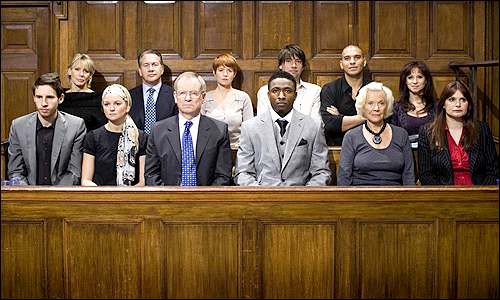
"When members of a group are outraged, they end up still more outraged as a result of talking to one another."
The mock-jurors ended up giving a harsher punishment than any of them thought was fit using their individual value system.
Do any of you guys have an idea about what causes this? I have a few, but I'm interested to hear what you think!
Urban Sociology class:
An economic ghetto (also know as a 'slum') has a lot to offer people, according to my teacher. He says some of the opportunities that slum's offer are:
Anonymity: they're good to get lost in if you're a criminal
Economy: some people who aren't very poor live in ghettos to save money
Easy access to vices: drug addicts, alcoholics and gamblers can live cheaply and enjoy themselves
Humanitarian opportunities: you can run a soup kitchen, minister to the poor etc.
So basically, not just poor people live in slums. People who could live elsewhere choose to live in them because of their great opportunities.
He also said that researches have done studies and found the same level of resident satisfaction in these ghettos as with people who live in suburbs. These communities are very functional, and the people that reside in them all know each other. They just gather around the soup kitchen, instead of working class neighbors who gather round the bar, and middle class neighbors who gather in that special room they that no one but company is allowed in with the plastic on the furniture, and the upper class who gather round the country club.


1 comment:
That's funny about "resident satisfaction" in the ghetto. Economists are always pointing out how people's choices are rational--even if those choices are about living with dirty air and dangerous roads. The way they do this is by showing a) how people benefit by a given arrangement and b) the unexpected costs of alternative arrangements. Most people are extremely squeamish about this way of looking at things. You know, practically.
Post a Comment